ClearVisit
Designing a connected scheduling experience for patients and healthcare teams.
Overview
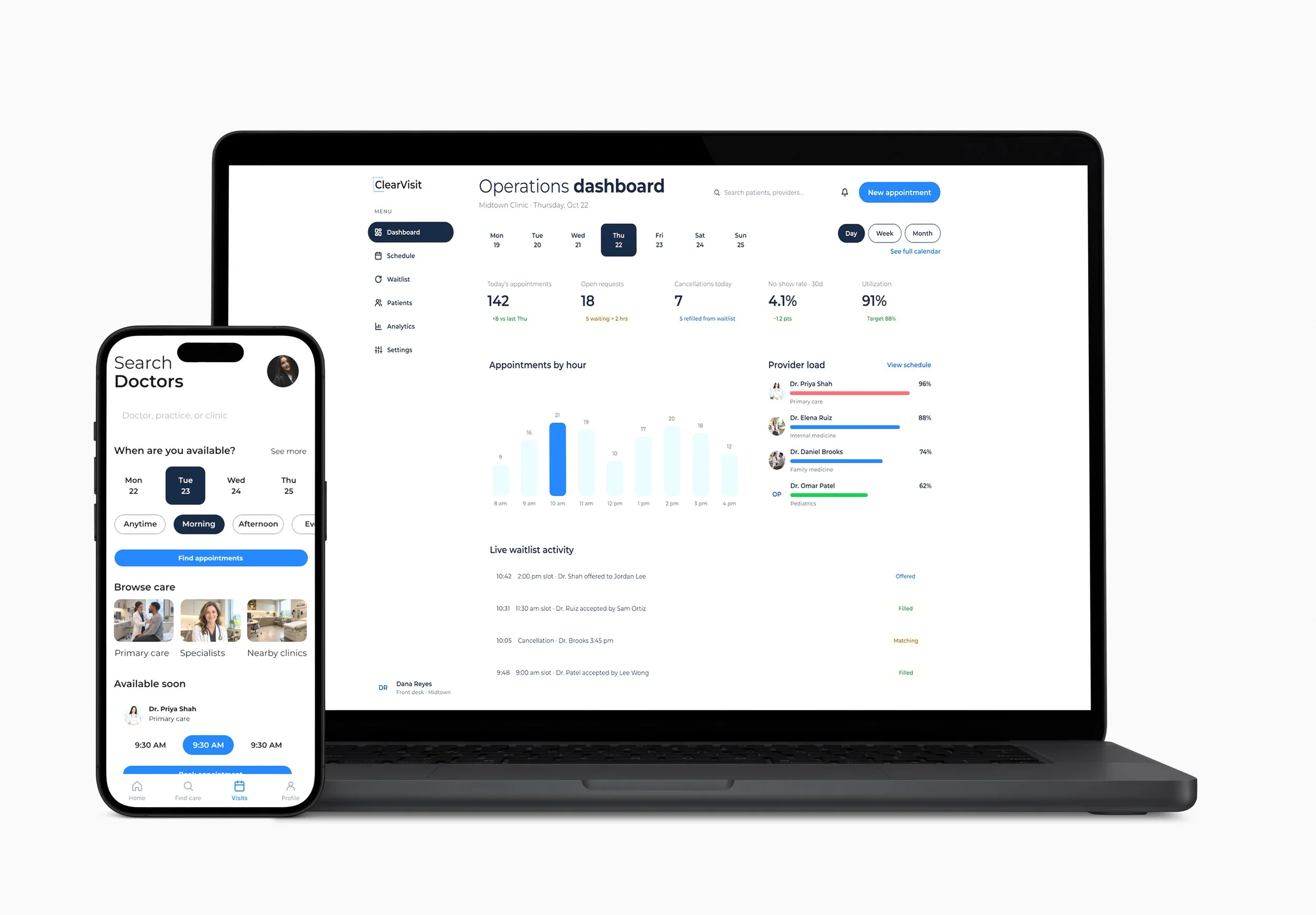
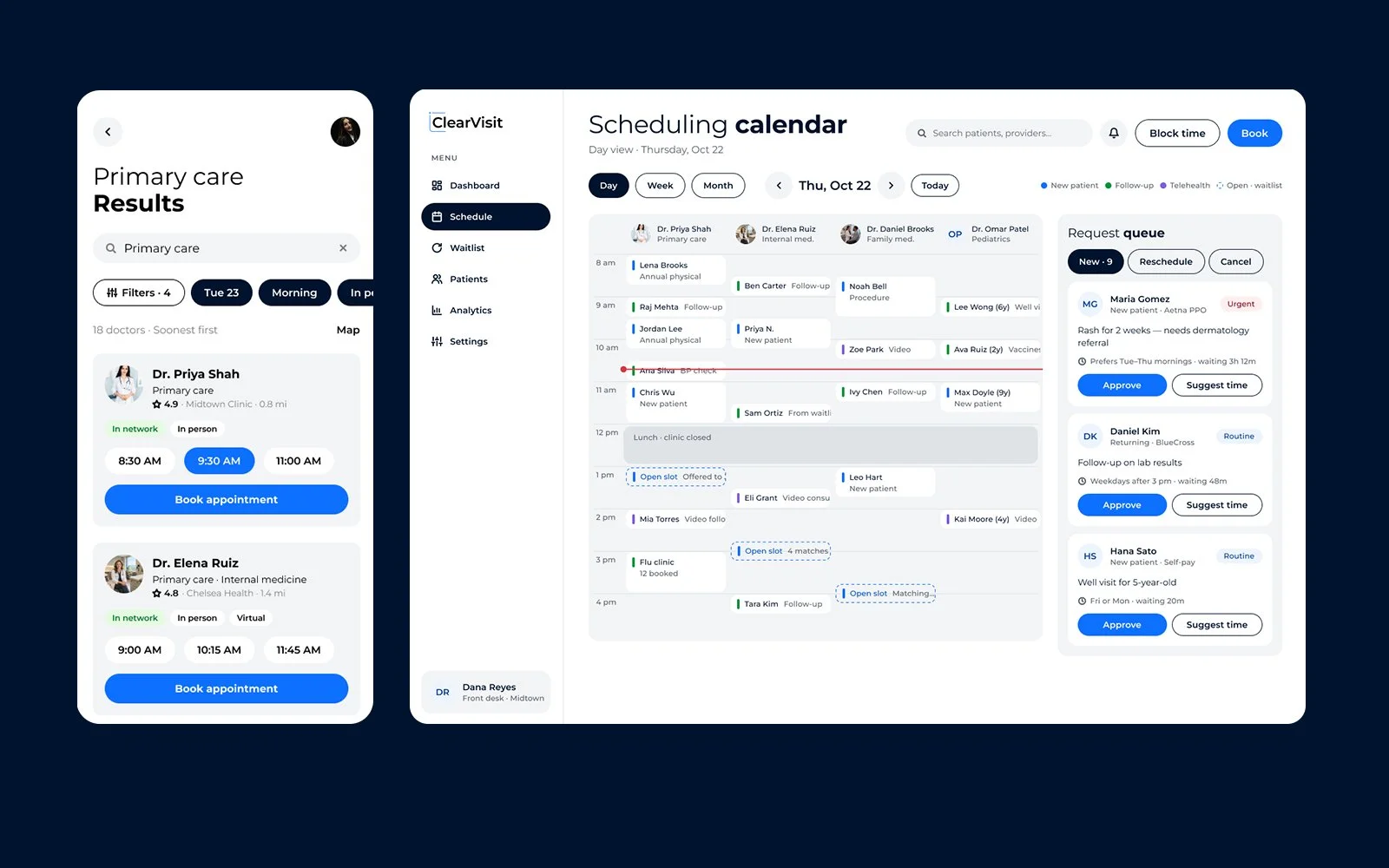
ClearVisit is a healthcare SaaS platform designed to simplify appointment scheduling for patients and streamline operations for medical practices. The experience connects a patient-facing mobile app with a desktop management portal, allowing patients to discover and book appointments around their availability while giving clinic staff the tools to manage schedules, patient requests, and appointment capacity.
Through research-informed design decisions, I focused on creating an intuitive mobile experience and an efficient, scalable desktop platform that balances patient convenience with the operational needs of healthcare providers.
Year
2026
Tools
Figma
Adobe Creative Suite
Role
Lead Designer
The Problem
Patients expect healthcare scheduling to be as convenient and accessible as booking travel, ordering food, or managing their finances. Yet finding and managing medical appointments often involves multiple platforms, phone calls, unclear availability, and limited scheduling flexibility.
These challenges extend to healthcare providers. According to a 2026 MGMA Stat poll, 32% of medical groups reported higher patient no-show rates compared to 2025, adding to the operational pressures of managing appointment availability, cancellations, and scheduling conflicts.
While patients need a simpler way to find and manage appointments that fit their schedules, healthcare teams need more efficient tools to coordinate care and maximize appointment capacity. Both audiences are navigating the same scheduling process, but with different needs and priorities.
Goal
Create a intuitive mobile experience and an efficient, scalable desktop platform that balances patient convenience with the operational needs of healthcare providers.
Research
Before designing ClearVisit, I explored the challenges patients face when scheduling medical appointments and the operational pressures clinics encounter when managing them.
My research focused on understanding where scheduling friction occurs, how patients prefer to find available appointments, and which workflows create unnecessary administrative work for healthcare teams.
The goal was to identify opportunities for a connected experience that improves appointment discovery for patients while making scheduling operations more manageable for clinics.
How do patients find appointments that work with their schedules?
What makes digital scheduling confusing or inconvenient?
What prevents clinics from managing appointment capacity efficiently?
Research methodology
Secondary research
Review publicly available healthcare research from MGMA and Experian Health to understand patient expectations, digital scheduling adoption, and operational challenges.
Method: Literature review and comparison of published survey findings
AI-Assisted Exploratory Research
To expand on the secondary research, I incorporated AI into my research process to explore potential user needs, behaviors, and scheduling challenges.
55%
Digital scheduling can be difficult to navigate
Experian Health, 2025
32%
Appointment attendance remains an operational challenge
Experian Health, 2025
80%
Patients want scheduling flexibility
Experian Health, 2025
Patient Mobile Experience
How secondary research informed the design decisions
Availability-centered discovery
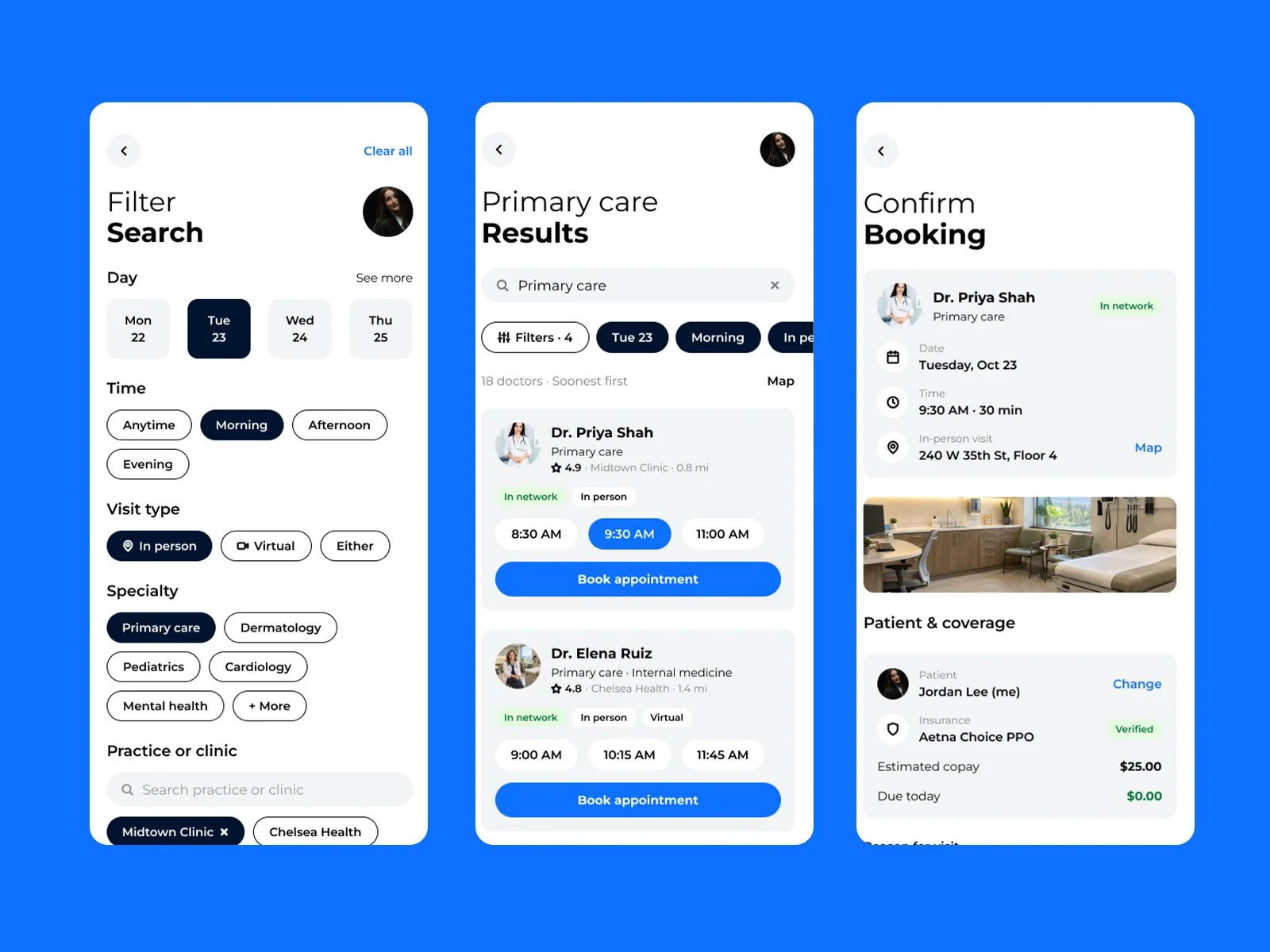
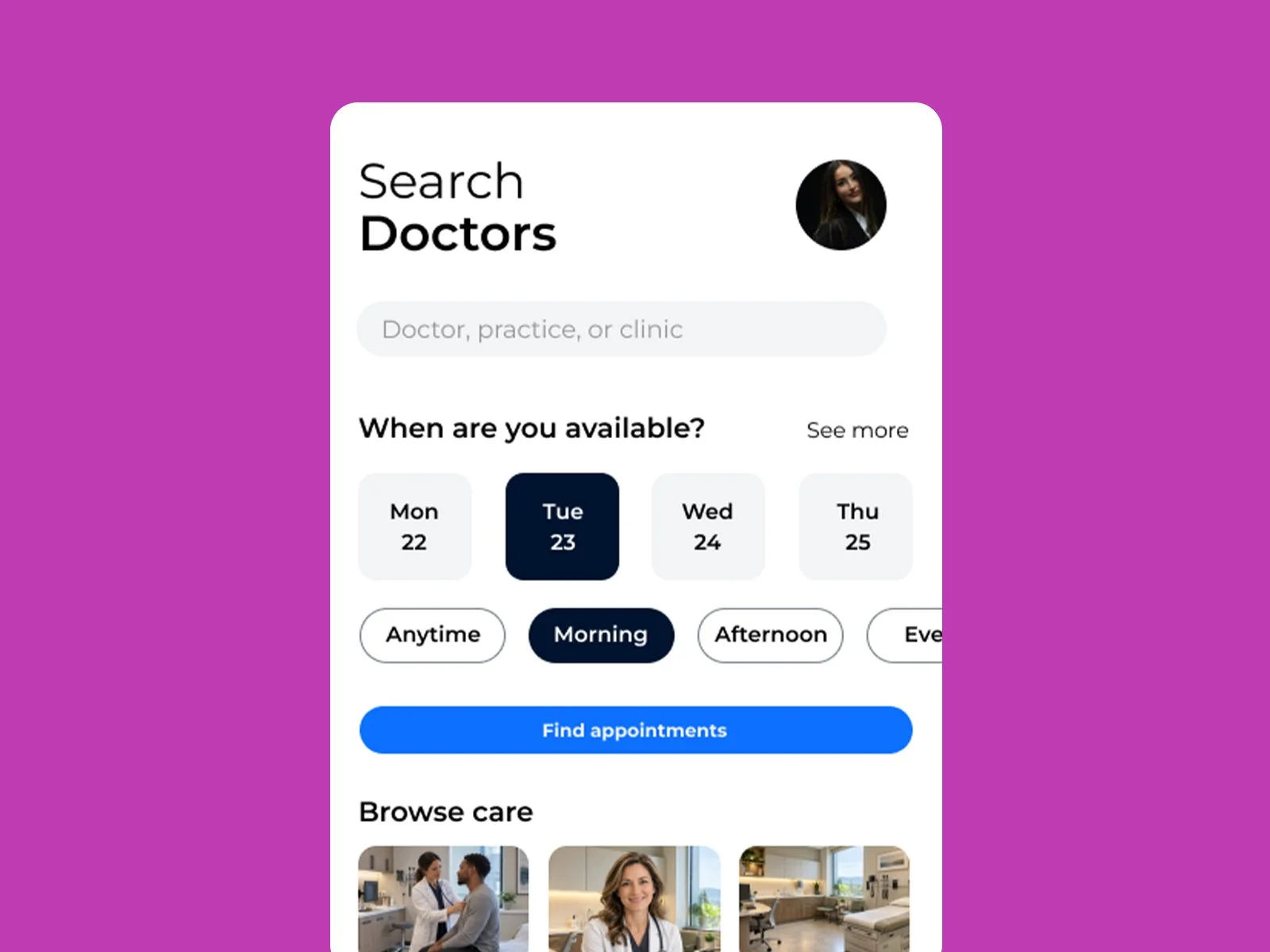
With 80% of surveyed patients wanting the flexibility to schedule appointments anytime, I prioritized helping users find doctors, practices, and clinics based on their availability rather than requiring them to search by provider first.
Simplified search and navigation
With 55% of surveyed healthcare providers reporting that patients struggle to navigate self-scheduling, I focused on a clean interface, intuitive search functionality, and progressive disclosure of filters to reduce unnecessary complexity.
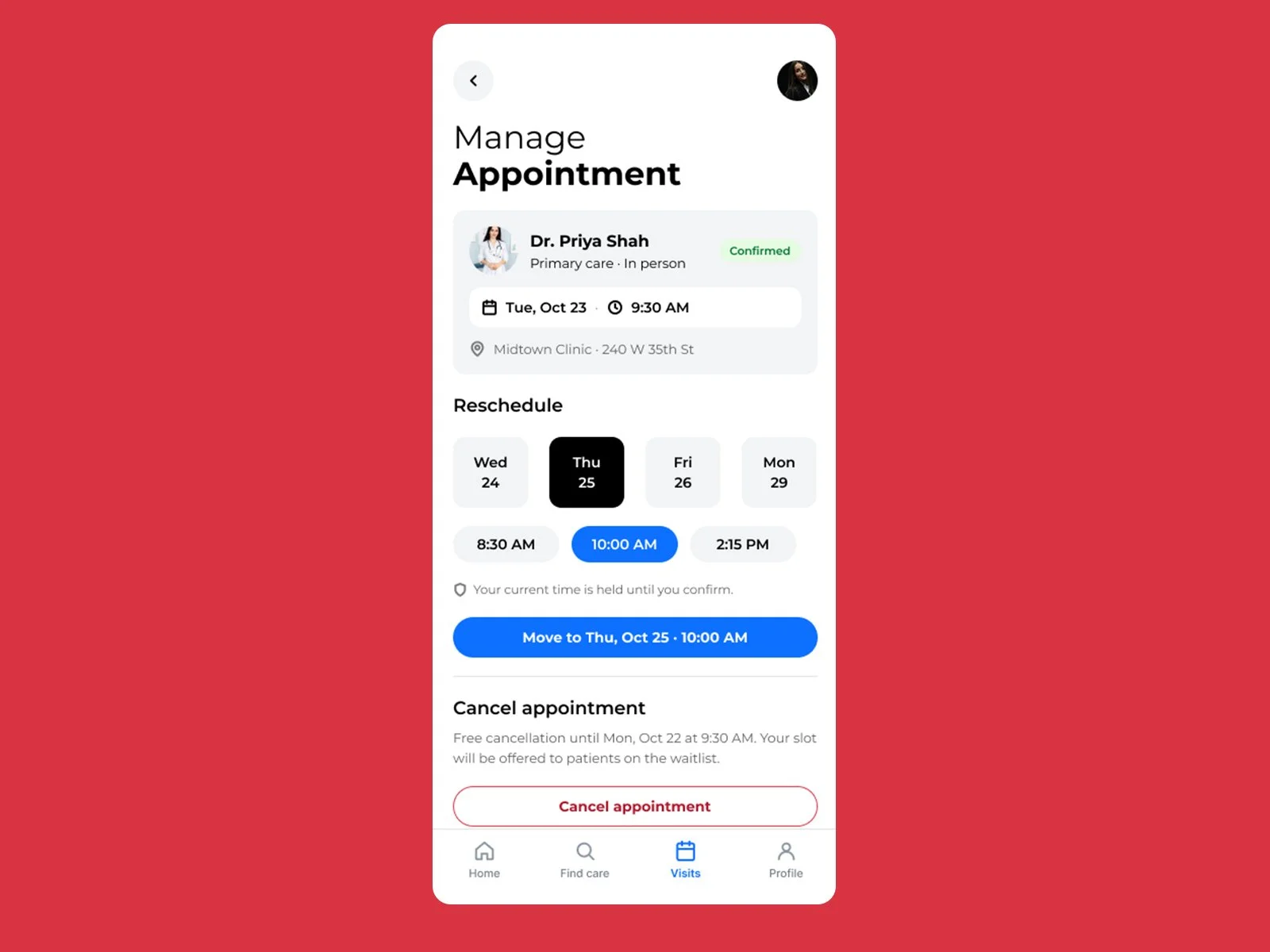
Flexible appointment management
With 32% of medical groups reporting increased no-show rates in 2026 compared to 2025, I incorporated accessible rescheduling and cancellation options to explore ways to reduce scheduling friction and help clinics recover available appointment slots.
Clinic Operations Experience
How secondary research informed the design decisions
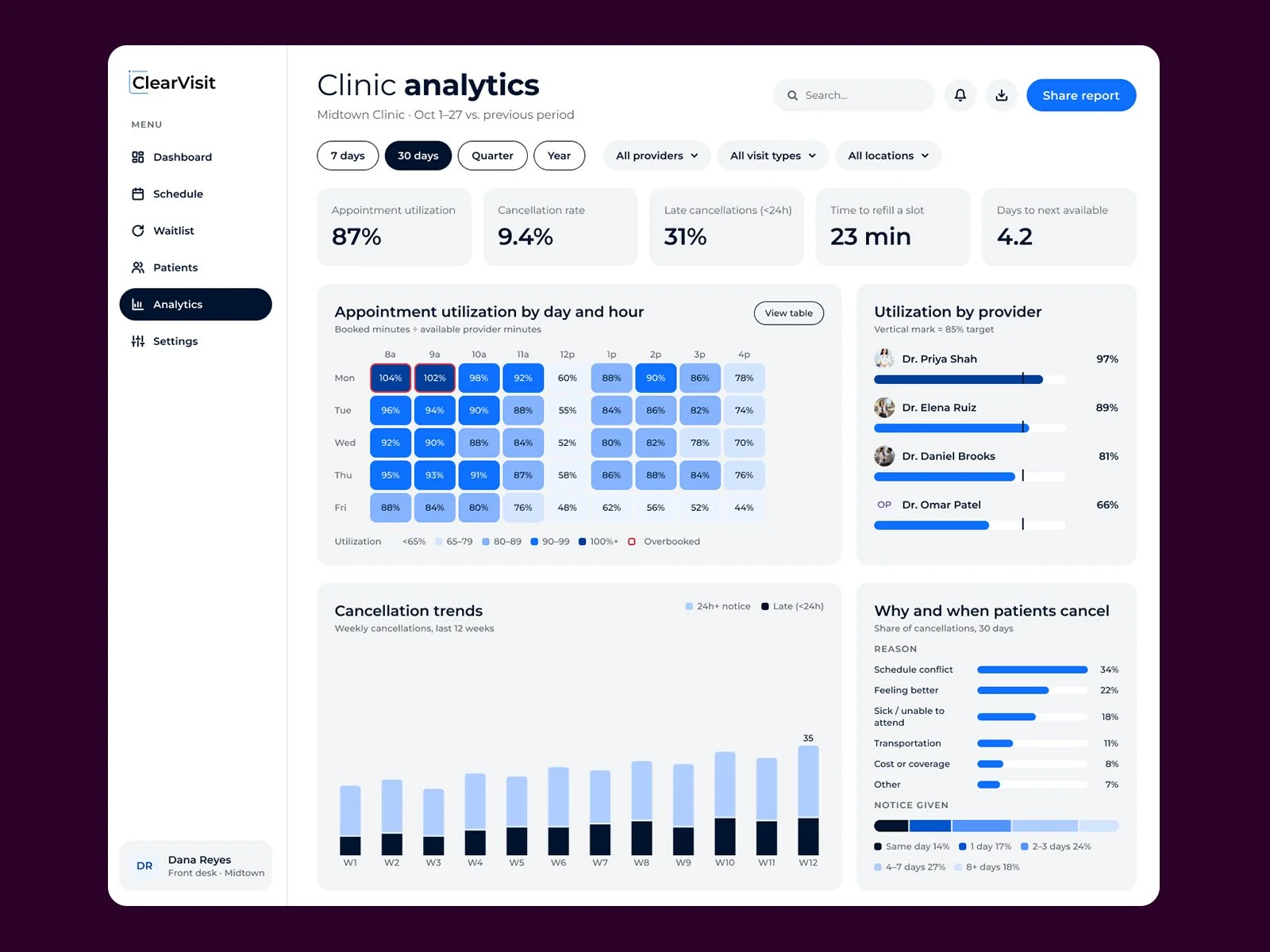
Data-driven operational insights
Appointment utilization metrics, cancellation trends, and scheduling performance indicators to help clinic managers identify potential bottlenecks and make more informed operational decisions.
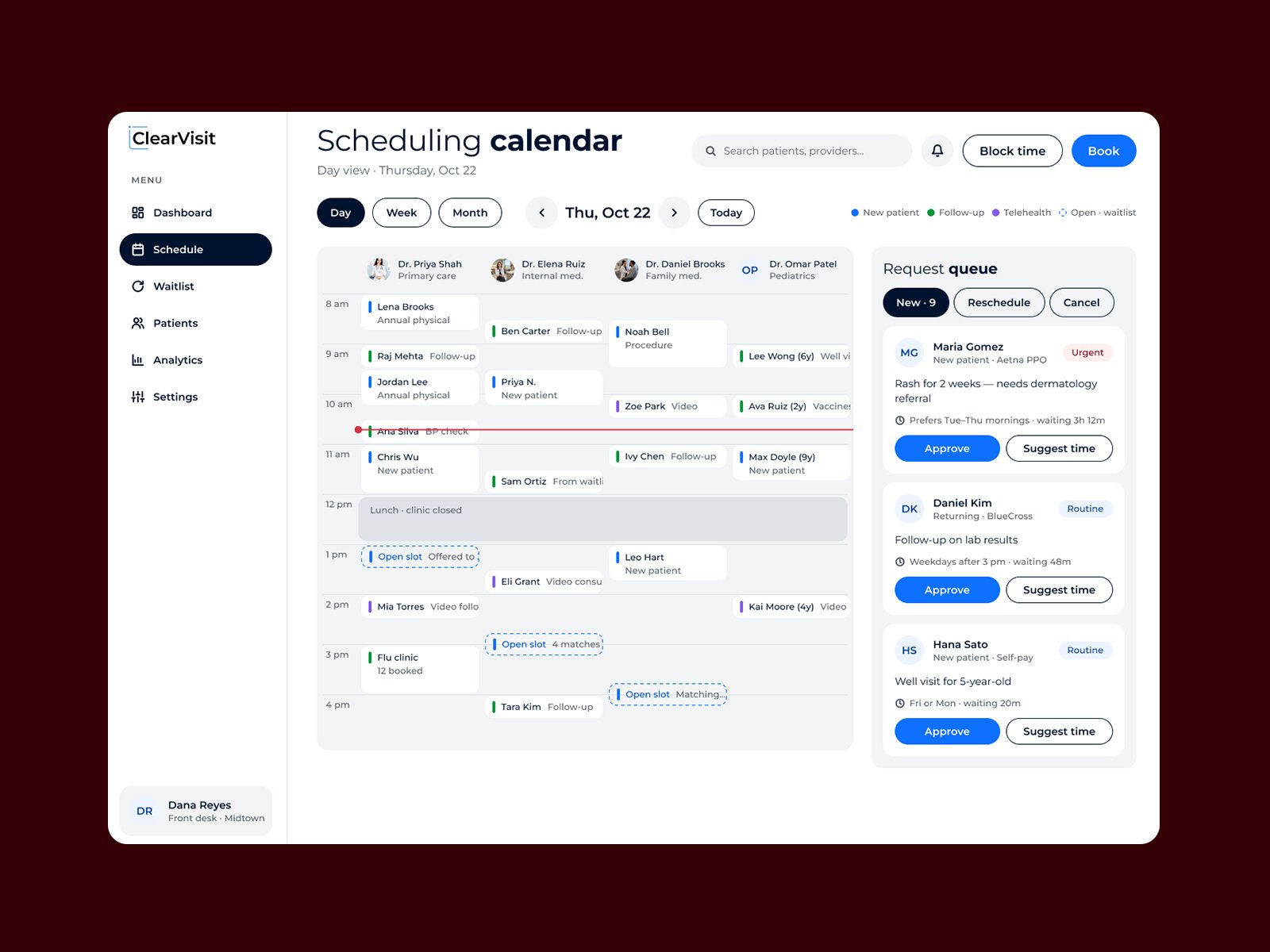
Improved scheduling visibility
With 71% of surveyed medical practices reporting that fewer than 25% of patients use digital self-scheduling, I focused on organizing appointment data, provider availability, and scheduling requests into accessible, actionable workflows.
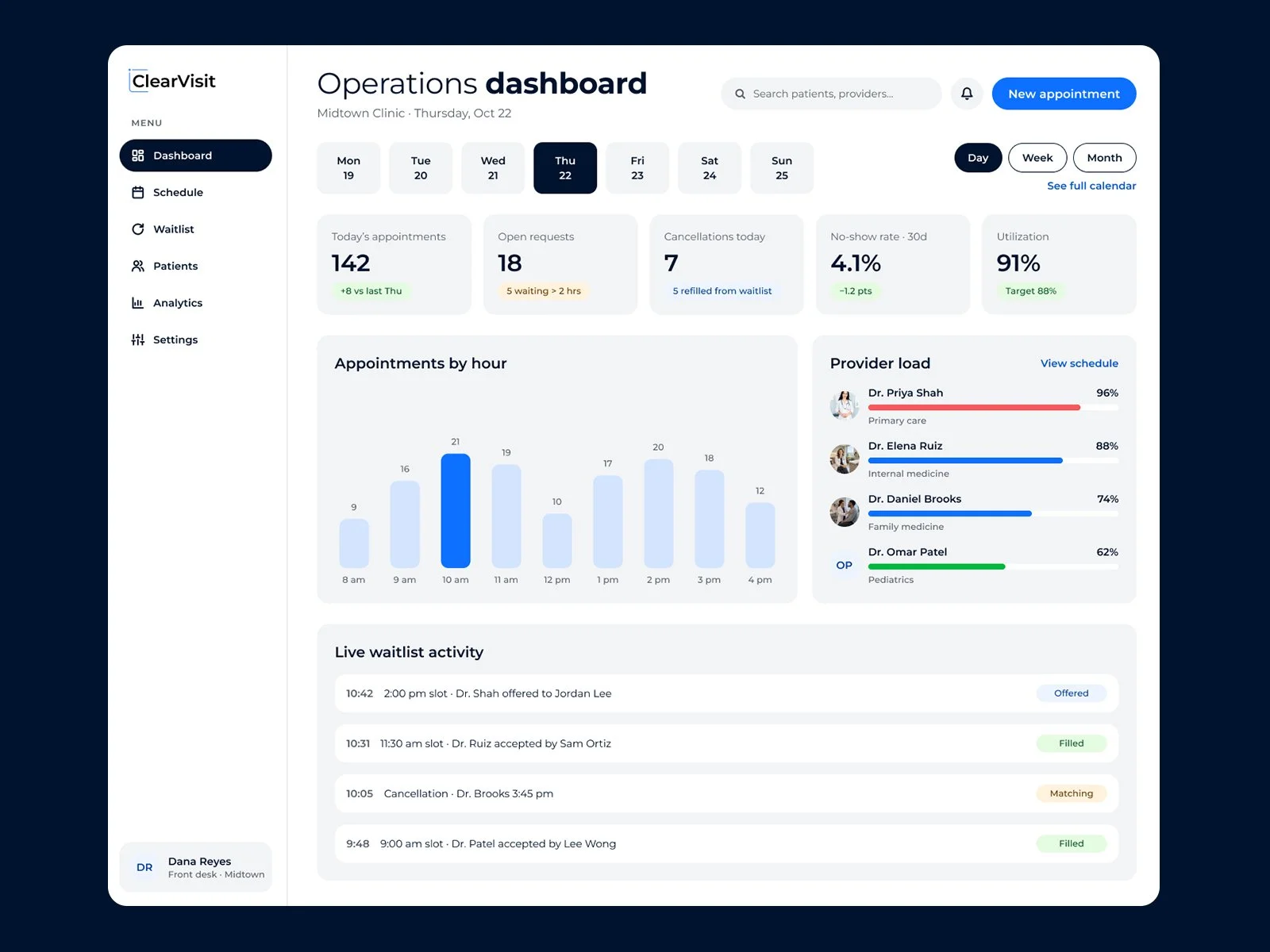
Centralized operations dashboard
With 32% of medical groups reporting increased no-show rates in 2026 compared to 2025, I prioritized a dashboard that gives clinic staff visibility into appointment schedules, cancellations, pending requests, and available capacity.